
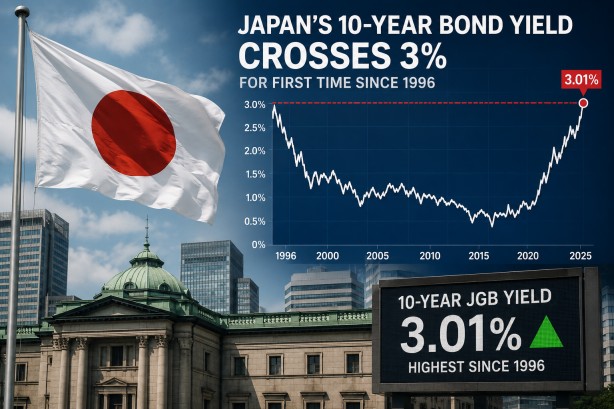
In a historic development for Japan’s financial landscape, the yield on its 10-year government bonds has surpassed 3% for the first time since 1996. This notable increase signifies a pivotal change in the bond market, enhancing the attractiveness of Japanese fixed-income assets. As a result, Japanese investors are now re-evaluating their overseas bond portfolios, a shift that could potentially alter the long-standing trend of Japanese capital flowing into global debt markets. Official figures reveal that by August 22, there had already been a net outflow of ¥3 trillion ($18.7 billion) from foreign debt holdings this year.
The competitiveness of domestic bonds is being bolstered by the higher yields, particularly when considering the diminishing returns from overseas investments due to currency-hedging costs. A recent survey involving 82 Japanese corporate pension funds indicated the strongest net intent to increase investments in domestic bonds since the survey’s inception in 2008. This growing inclination towards domestic assets is noteworthy, as Japanese investors have traditionally been significant purchasers of U.S. Treasuries and other international sovereign debt instruments.
Such a shift in investment strategy carries implications for global financial markets. Should Japanese investors continue reducing their overseas debt purchases, it could exert upward pressure on international bond yields and the associated borrowing costs. The current trend has been primarily fueled by inflationary concerns, anticipated rate hikes by the Bank of Japan, and increasing apprehensions regarding Japan’s fiscal health.
Despite these dynamics, analysts suggest that the ongoing changes are more indicative of a gradual rebalancing towards domestic investments rather than an abrupt or large-scale retreat from foreign markets. This nuanced adjustment reflects a strategic reconsideration by investors in response to evolving economic conditions.