
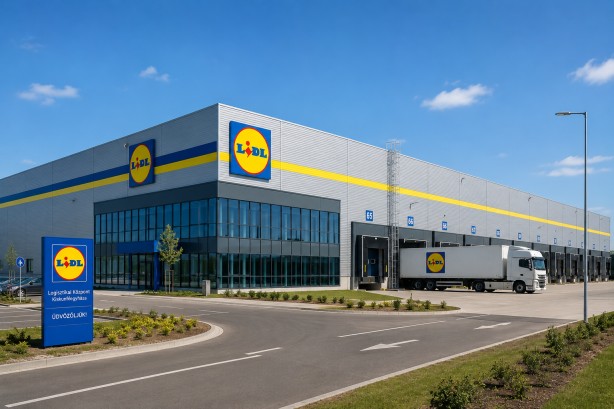
In a significant development for its operations in Hungary, Lidl has inaugurated a massive new logistics center in Kiskunfélegyháza. This facility, which represents a substantial investment of nearly 60 billion forints (approximately €162 million), is now the largest warehouse for the retailer in the country. Its role is critical, as it aims to supply around 70 Lidl stores, enhancing the company’s distribution capabilities across the region.
Spanning over 83,000 square meters, the logistics center is not only a testament to Lidl’s growth ambitions but also a significant contributor to the local job market. It has already created more than 400 jobs, with plans to recruit an additional 50 employees in the near future. The facility’s infrastructure includes 194 loading docks and a dedicated 24,000-square-meter refrigerated section, underscoring its capacity to manage substantial logistics operations.
Energy efficiency is a key feature of the new center. A 9,000-square-meter solar panel installation on the rooftop helps reduce the facility’s carbon footprint, while innovative technology recycles waste heat from the refrigeration systems to provide underfloor heating. This sustainable approach is complemented by the development of a 10,000-square-meter biodiverse green area surrounding the logistics hub, reflecting Lidl’s commitment to environmentally friendly practices.
The opening of this logistics center is poised to fortify Lidl’s supply network across Hungary, with the facility expected to dispatch approximately 4,500 pallets of goods daily. This expansion aligns with Lidl’s strategy of bolstering its presence in Hungary, where the retailer currently operates 220 stores. Notably, Lidl sources nearly 60% of its products from Hungarian suppliers, highlighting its role in supporting local businesses and the national economy.
With this new logistics center, Lidl continues to lay the groundwork for further expansion and operational strengthening within Hungary. The investment not only underscores Lidl’s confidence in the Hungarian market but also its commitment to enhancing efficiency and sustainability in its supply chains.