
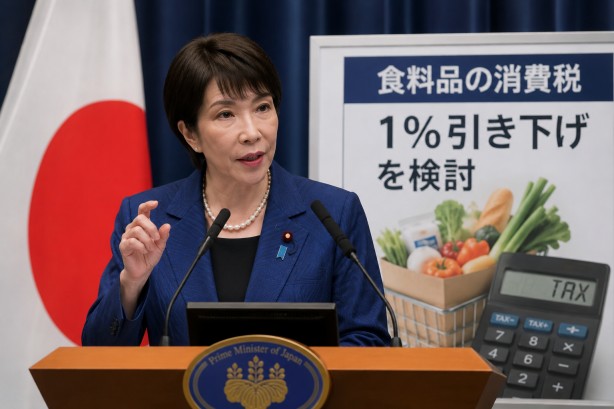
Japanese Prime Minister Sanae Takaichi is set to direct her party, the Liberal Democratic Party, to advance a plan that would see a significant reduction in the consumption tax on food items. This proposal aims to lower the current tax rate from 8% to 1% and would be implemented for a duration of two years, starting in April 2027. The move comes as efforts to reach a consensus on tax reform have reached an impasse in cross-party discussions.
The government, along with its coalition partners, is advocating for this temporary tax cut as part of a broader strategy to provide economic relief. In addition to the tax reduction, the plan includes cash assistance targeted at low- and middle-income households, amounting to approximately ¥600 billion in financial support. This measure is intended to mitigate the rising cost-of-living pressures that many households are currently facing.
There is a clear timeline for these initiatives, with the government aiming to finalize the policy framework by early August. This would allow for the necessary legislation to be introduced during an extraordinary session of parliament later in the year. The goal is to ensure that the tax reduction and associated support measures are in place by the following April, offering timely relief to those in need.
The proposed tax cut and financial assistance are pivotal components of the government’s strategy to address economic challenges and support household finances. By reducing the consumption tax on essential food items, the administration hopes to alleviate financial strain and stimulate economic activity. The coordinated efforts between the ruling party and its coalition partners underscore a commitment to finding practical solutions amid ongoing fiscal policy debates.