
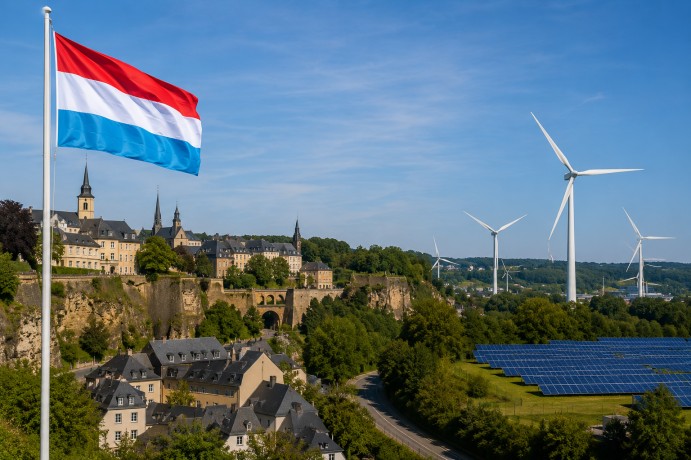
In 2025, Luxembourg emerged as one of the European Union’s lowest performers in terms of renewable electricity consumption, as revealed by the most recent Eurostat figures. Despite ongoing advancements in the use of renewable energy throughout the EU, Luxembourg’s performance stands out for its relatively low numbers. The country reported that renewable sources contributed just 20.2% to its gross final energy consumption, placing it near the bottom of the EU rankings. When it comes to electricity specifically, only 23.3% of Luxembourg’s gross electricity consumption was derived from renewable sources, ranking it above only Czechia and Malta.
The broader picture across the European Union shows a more optimistic trend. By 2025, renewable energy accounted for 26.2% of the bloc’s gross final energy consumption, marking a significant increase from 9.6% recorded in 2004. The EU has ambitious plans to further boost this figure, targeting a 42.5% share of renewable energy by 2030. This upward trajectory highlights the collective effort within the bloc to transition towards more sustainable energy sources.
Leading the charge in renewable energy consumption within the EU is Sweden, with an impressive 65.4% of its overall energy consumption coming from renewable sources. Finland and Denmark also follow closely behind, showcasing their commitment to sustainable energy practices. Austria has distinguished itself in the realm of renewable electricity, achieving over 90% of its electricity generation from renewable sources, setting a benchmark for other EU countries to aspire to.
The varying performances among EU member states underline the diverse approaches and challenges faced in the transition to renewable energy. While some countries have made substantial progress, others, like Luxembourg, still have a considerable journey ahead to catch up with their more advanced counterparts. These disparities highlight the need for tailored strategies and support to ensure a cohesive movement towards the EU’s renewable energy targets.