
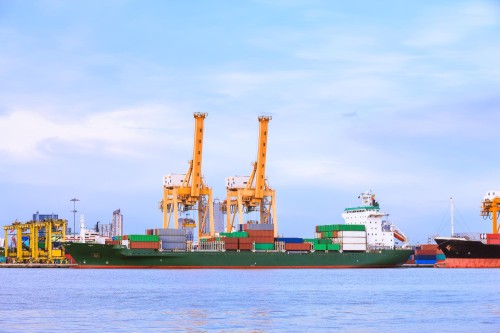
Europe is grappling with a renewed economic challenge from China that threatens to undermine local manufacturing sectors, potentially leading to job losses and increased influence of Chinese industries. This concern, voiced by trade analysts and industry representatives, echoes the “China shock” experienced by the United States 25 years ago. At that time, China’s entry into the World Trade Organization led to a surge in imports that displaced domestic industries and resulted in the loss of up to 2.5 million American jobs. Now, European officials are worried about a similar impact on their industries due to China’s growing role in global trade.
Jens Eskelund, president of the European Chamber of Commerce in Beijing, highlights that the issue extends beyond finished goods like electric vehicles. Instead, it’s the vast number of components imported from China that is increasing Europe’s dependency on Chinese supply chains. With these components becoming more integral to the EU’s industrial processes, the bloc faces difficult decisions. A recent Financial Times report suggests that the EU is contemplating a mandate for companies to source critical components from at least three different suppliers to mitigate this dependency.
European commissioners are set to convene on May 29 for urgent discussions on possible countermeasures. Oliver Richtberg, head of foreign trade at VDMA, commended the EU’s proactive stance but criticized Berlin’s engagement. He highlighted that state subsidies in China, which are not feasible in Europe, make Chinese products more affordable. Additionally, exchange rate fluctuations over the past five years have potentially undervalued the yuan against the euro by as much as 40%, leaving European procurement officers with limited options.
The trade disparity is evident in sectors such as amino acids and polyhydric alcohols, where EU imports from China overwhelmingly dominate by volume. This situation, described by an anonymous trade consultant, poses a significant risk to EU industries, making local production economically unviable and increasing reliance on Chinese imports. China’s trade surplus with the EU continues to grow, further exacerbating the challenges faced by European industries.
Efforts to safeguard European industry include legislative proposals like the Industrial Accelerator Act and updates to the Cyber Security Act. However, these measures won’t take effect until 2027, leaving the EU under pressure to find immediate solutions. Andrew Small, director of the Asia programme at the European Council on Foreign Relations, argues that the EU’s current tools are insufficient to address the import levels from China. Meanwhile, China remains the dominant player, with Beijing poised to counter any EU measures that might threaten the flow of Chinese exports.