
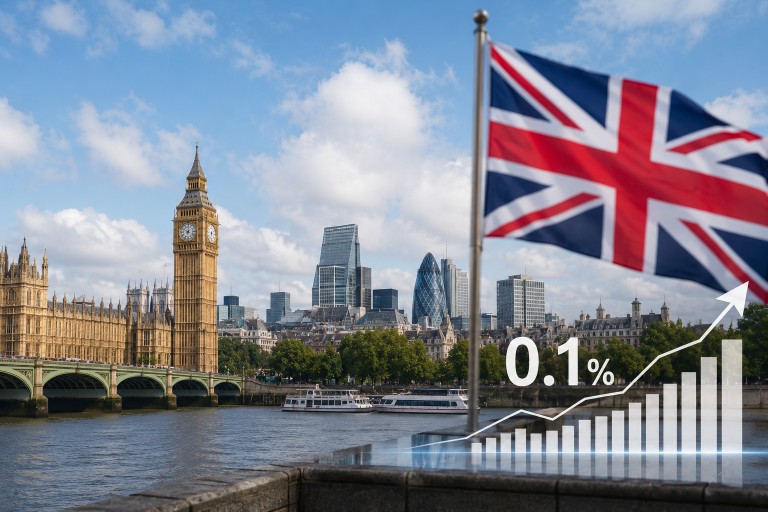
The UK economy experienced a slight increase in growth during May, posting a 0.1% expansion after facing a contraction of the same magnitude in April. This modest growth primarily stemmed from a 0.3% rise in the services sector, though it was tempered by a 0.5% drop in production and a 0.8% decrease in construction activities. Notably, the scientific research and development sector emerged as a standout performer, achieving a significant 5.1% increase over the month.
Reviewing the broader economic performance over the three months leading up to May, the economy grew by 0.7%. This rate was a slight deceleration compared to the 0.8% growth seen in the preceding three-month period. Despite these fluctuations, the economic landscape demonstrated a degree of resilience in the face of challenges such as rising energy prices and persistent global uncertainties, notably those linked to the ongoing Middle East conflict.
Economists have noted that while the UK economy has shown signs of robustness, there remain pressing concerns. The continued elevation in energy costs, coupled with disruptions in supply chains, are highlighted as potential threats that could hinder future growth. These factors underscore the precarious balance the economy must maintain as it navigates through these challenges.
The International Monetary Fund recently adjusted its outlook for the UK’s economic performance, projecting a growth rate of 1% for the current year. Despite this optimistic revision, analysts caution that the economic forecast is still shrouded in uncertainty. Geopolitical tensions continue to cast a shadow over the economic horizon, leaving many to speculate about the potential impacts on future growth dynamics.